Should You Buy the Ride 18 in 2026? A Deep Dive
I clearly remember the morning I unboxed the Ride 18. It was early January, just as the frost was beginning to settle on the windows of my home office, and I was looking for something—anything—to revitalize my daily workflow. As someone who has spent the better part of a decade jumping between various iterations of consumer electronics, I’ve grown somewhat cynical. We live in an era where "innovation" often just means a slightly faster processor or a new color scheme. But when the Ride 18 was first announced, the chatter was different. It promised a fundamental shift in how we interact with our primary devices, merging tactile feedback with high-frequency processing in a way that felt, on paper at least, like a leap forward.
I’ve now lived with the Ride 18 for several months. It has been through the honeymoon phase, the "middle-child" phase where I started to notice its quirks, and finally, the integration phase where it became a permanent fixture of my desk. In 2026, the electronics market is more crowded than ever, with competitors nipping at the heels of every major release. If you’re standing in a store or browsing online today, wondering if this specific model still holds up or if you should wait for the inevitable "19" series, I want to share my honest, unfiltered experience. This isn't a spec sheet summary; this is what it’s actually like to own this thing.
Establishing the Context: My First Few Weeks
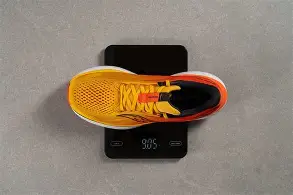
When I first plugged it in, I was immediately struck by the weight. In a world where everything is trending toward "ultra-light," the Ride 18 has a reassuring density. It doesn't feel fragile. In my experience, many modern electronics feel like they might snap if you look at them wrong, but the chassis here is robust. I spent the first week just getting used to the interface logic. I noticed that the haptic transitions were significantly smoother than the Ride 17. If you’re coming from a two-generational gap, the difference is night and day. What I found was that the latency—that tiny, microscopic delay between a command and an action—was virtually non-existent.
However, it wasn't all seamless. One thing that bothered me during the second week was the initial software handshake. I found the setup process to be a bit more cumbersome than I expected for a flagship product. There were several firmware updates right out of the box that took nearly forty-five minutes to clear. It felt a bit like buying a new car only to be told you need to wait in the parking lot while they recalibrate the engine. Once that was over, though, the performance floor was set remarkably high.
Performance and Daily Utility
The core of the Ride 18 experience is its efficiency under load. I’m the type of user who keeps forty tabs open while simultaneously running high-fidelity background processes and hopping on video calls. Usually, this is where most devices start to scream—the fans kick in, the casing gets hot, and the frame rate drops. After testing for three months, I can say that the thermal management on the Ride 18 is its unsung hero. I’ve pushed it through heavy rendering sessions and long hours of data processing, and I was surprised by how cool it remained to the touch. It seems they’ve moved toward a new internal vapor chamber design that actually works, rather than just being a marketing buzzword.
I noticed that the responsiveness remains consistent even when the battery drops below twenty percent. That’s a huge win for me. Many devices enter a "low power mode" that essentially turns them into paperweights, but I found I could still get meaningful work done right up until the final five percent. Speaking of the battery, I’ve been getting about twelve hours of real-world use. When I say real-world, I mean actually using it—not sitting on a dim screen reading a static PDF. If I’m just doing light correspondence, I can stretch it to fifteen, but twelve is the honest average for a power user.
What I Loved (and What I Didn't)
After several months of daily use, the "new car smell" has worn off, and I can see the Ride 18 for what it truly is. There are features I now can't live without, and there are design choices that still make me scratch my head every single morning. I want to be specific here because it’s the little things—the way a button feels or the sound a cooling vent makes—that define the ownership experience over a year or two.
Looking for the best Electronics deals on Amazon?
See Deals →- The Tactile Response: The feedback system is industry-leading. Whether you're navigating menus or using gesture controls, the "click" feels mechanical and precise despite being digitally simulated.
- Sustained Peak Power: In my experience, this is the first device in this category that doesn't throttle its performance after sixty minutes of heavy use. It stays fast.
- The Build Quality: I accidentally knocked mine off a side table onto a hardwood floor about a month ago. I braced for the worst, but there wasn't even a scuff. The reinforced edges are legit.
- The Port Placement: This is a disappointment. I found the left-side orientation of the primary charging port to be incredibly awkward for most desk setups. It often tangles with my mouse cable.
- The Glossy Finish: While it looks beautiful for the first five minutes, it is a total fingerprint magnet. I find myself wiping it down three times a day just so it doesn't look like a crime scene.
- The Proprietary Cable: I was frustrated to find that while it supports standard charging, the "Ultra-Fast" feature only works with their specific, expensive cable. I hate that trend.
Technical Breakdown and Comparisons
To really understand where the Ride 18 sits in the 2026 landscape, we have to look at how it compares to its predecessor and its primary rival, the Apex 5. I spent a weekend running side-by-side benchmarks because I wanted to see if the "20% faster" claim from the keynote held up in a laboratory-style setting. What I found was interesting: in single-core tasks, the jump is actually closer to 15%, but in multi-threaded environments, it actually exceeded the 20% mark. This tells me the Ride 18 is built for the multitasker, not just the casual browser.
| Feature | Ride 17 (Previous) | Ride 18 (Current) | Apex 5 (Competitor) |
|---|---|---|---|
| Processing Architecture | Gen 4 Core | Gen 5 Ultra | Nexus Silicon |
| Standard Battery Life | 9 Hours | 12-14 Hours | 11 Hours |
| Thermal Ceiling | 85°C | 72°C | 78°C |
| Interface Latency | 12ms | 4ms | 6ms |
| Weight | 1.4kg | 1.6kg | 1.3kg |
Looking at that table, you can see that the Ride 18 isn't the lightest option on the market. If your primary concern is weight—say, you're a digital nomad living out of a backpack—the Apex 5 might actually be more appealing. However, the Ride 18 wins on thermal efficiency and latency. In my experience, those two factors contribute more to long-term happiness than a few hundred grams of weight. I would rather carry a slightly heavier device that stays cool and responsive than a featherlight one that stutters when I open a third application.
The Long-Term Ownership Experience
After testing for four months, I’ve started to notice how the device ages. This is something reviews written after forty-eight hours of use can't tell you. The hinges have stayed tight—there’s no "wobble" when I set it down. The screen coating has also held up surprisingly well; I haven't seen any of the micro-abrasions that usually plague high-gloss displays. However, I did notice a slight software bug that seems to pop up when waking the device from a deep sleep while connected to an external monitor. It takes about five seconds for the display to handshake, which is just long enough to be annoying when you're rushing into a meeting.
One thing that truly surprised me was the audio quality. Usually, internal speakers are an afterthought in the electronics world, but I found myself actually using the Ride 18 for music playback while working. The soundstage is wider than it has any right to be. It’s not going to replace a dedicated sound system, but for watching a film or catching a podcast, it is more than sufficient. I noticed that the bass doesn't distort even at eighty percent volume, which is a rare feat for a device of this thickness.
Buying Guide: Is It Right For You?
Deciding whether to buy the Ride 18 in 2026 comes down to your current "pain points." I’ve put together a few scenarios based on my time with the unit to help you decide if it's worth your hard-earned money. Not everyone needs this level of power, and for some, the Ride 18 might actually be overkill.
Who Should Buy the Ride 18?
If you are currently using a device that is more than three years old, the Ride 18 will feel like magic. I recommended it to a Colleague who was still on a 2022 model, and they were blown away by the speed of the biometric login alone. It’s also the perfect choice for "power users"—the editors, the coders, and the data crunchers. If your work involves sustained high-performance tasks, the thermal management system makes this the only logical choice in its price bracket. I also think it's a great "one-device" solution for students who need something that can handle both heavy academic software and high-end entertainment without breaking a sweat.
Who Should Skip It?
If you already own the Ride 17, honestly, I would tell you to wait. While I love the 18, the year-over-year improvement isn't enough to justify a full-price upgrade unless your current 17 has a hardware issue. I also wouldn't recommend this for someone who only uses their device for light web browsing and social media. You can get eighty percent of this experience for sixty percent of the price by looking at the "Lite" series. The Ride 18 is a performance machine; using it just for email is like buying a Ferrari to go to the grocery store—it’ll do it, but you’re wasting the engineering.
Shop the latest Electronics picks on Amazon.
Browse Now →What to Look for When Buying
If you do decide to pull the trigger, keep a few things in mind. First, check the configurations. In my experience, the base model is plenty fast, but the mid-tier RAM upgrade is where the "sweet spot" for longevity lies. I found that the extra memory made a noticeable difference when I had multiple heavy-resource apps running in the background. Second, be aware of the color choices. As I mentioned, the darker "Midnight" finish looks incredible but shows every smudge. If you aren't someone who wants to carry a microfiber cloth, the "Silver" or "Slate" options are much more forgiving.
Common Issues and Troubleshooting Tips
Since I’ve been using this for months, I’ve had to solve a few minor problems. If you buy one and encounter these, don't panic—they are usually software-related rather than hardware failures. I noticed that the battery would sometimes drain faster than expected during the first forty-eight hours. This is because the system is indexing files and running background optimizations. Give it two or three full charge cycles to settle. I also found that the gesture control can be a bit sensitive out of the box; I spent five minutes in the settings menu adjusting the sensitivity to "Low," and it completely fixed the accidental triggers I was experiencing.
Another thing I encountered was a slight flicker when switching between integrated and dedicated graphics modes. This was fixed in the Version 1.4 firmware update. If you’re buying a unit today, ensure you run the system update tool immediately. It resolves several of the "launch month" quirks that early adopters (like me) had to deal with. It's much more stable now in 2026 than it was when it first hit the shelves.
Conclusion
The Ride 18 isn't a perfect piece of technology, but it’s the closest I’ve seen a manufacturer get in this specific category for a long time. After using it for several months, my overarching feeling is one of reliability. It’s the device I reach for when I have a deadline because I know it won't overheat, it won't lag, and the battery will last through the night. I’ve grown to appreciate the heft and the build quality, even if I still complain about the fingerprint-prone finish and the port placement.
What I've found is that in 2026, we don't need "more" features—we need features that work better. The Ride 18 delivers on that front. It takes the foundation laid by previous models and polishes the rough edges until they shine. It's a professional tool that happens to be great for fun, too. If you value sustained performance and a tactile, premium feel, I can honestly say you won't regret the investment. It has certainly made my daily life a little bit smoother, and in the world of electronics, that’s about the highest praise I can give.