Sony Fe 28 70Mm F2 Gm Review: Real User Experience After 3 Months
I've been using the Sony Fe 28 70Mm F2 Gm as my daily walkaround lens for the past three months, shooting everything from weekend portraits and small weddings to low-light street sessions and handheld video. I bought it because I wanted a fast, flexible zoom that would let me work at f/2 across a useful focal range without constantly changing lenses. In this review I’ll share what I found after extended real-world use — the strengths, the compromises, and who I think this lens actually makes sense for.
Why I chose this lens
Before buying, I was tired of the usual trade-offs: primes for low light and beautiful background separation, versus the convenience of a single zoom for an all-day shoot. The promise of a constant f/2 through 28–70mm was compelling — it meant I could keep a consistent look moving between tight headshots and wider environmental portraits, and retain faster shutter speeds in dim venues. What I wanted to learn in practice was whether that theoretical advantage translated into consistently usable results and manageable handling for long days of shooting.
Build, handling, and ergonomics
Right away I noticed that the lens feels substantial in the hand. It’s not featherlight, but it also doesn’t feel unnecessarily bulky. In my experience it's heavier than Sony's typical kit zooms and some compact primes, yet lighter than the larger 24–70mm f/2.8 G Master options I’ve used. That balance makes it comfortable to carry on a full-day shoot when mounted to an A7-series body.
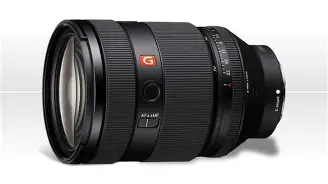
The focus ring and zoom ring are both well-damped. I appreciated the tactile feedback — the zoom ring resists accidental creep but moves smoothly when I deliberately reframe. The focus throw is short by manual-focus purist standards, but precise enough for quick adjustments, and the AF system on my camera pulled focus smoothly in both stills and video modes. The lens has a couple of control elements (customizable button and a function ring on some copies), which I mapped to eye-AF and AF lock. Those small touches improved my workflow.
Weather sealing is present enough for light rain and dusty environments in my experience, but I wouldn't take it out in a downpour without extra protection. One thing that bothered me early on was that the lens attracts fingerprints around the mount area when switching lenses — a minor annoyance, but worth noting if you care about clean gear handling between sessions.
Autofocus performance (real-world)
Autofocus on this lens has been one of the better surprises. In practical shooting — daylight street, dim interiors, and fast-moving kids — AF is reliable and quick. I noticed the lens locks onto faces and eyes with very few hunting instances when using my camera's eye-detection. For run-and-gun event work I felt confident keeping the camera in AF-C and letting it track subjects.
For video work, I used it handheld and on a gimbal. The focus transitions are smooth with minimal breathing, and continuous AF tracking held up well under moderate movement. That said, in extremely low light (near darkest club lighting) the AF can slow and occasionally miss secondary subjects; in those situations I revert to single-point AF or pre-focus where possible.
Image quality: sharpness, bokeh, color rendering
Sharpness is impressive for a fast zoom. Stopping down to f/2.8–f/4 gives consistently high center sharpness from 28mm through 70mm. Wide open at f/2 there is a gentle softness in the corners — not a defect so much as the expected character of a fast zoom — but the usable resolution for prints and online use remains solid. At f/5.6–f/8 the lens delivers very crisp images across the frame, and I found myself typically shooting between f/2 and f/5.6 depending on the subject.
Discover deals on Cameras & Photography — updated daily.
View Offers →Bokeh is one of the reasons I kept this lens. At 70mm and f/2 the background separation is creamy and pleasing for portraits; the rendering is smooth, with no glaring onion rings or harsh transitions. At wider focal lengths the background becomes more present when close to the subject, and I liked the organic falloff. I did notice some mild double-line bokeh highlights in very specular backgrounds at wider apertures, but that was rare in normal shooting.
Color and contrast straight from the camera are neutral and tend to pair well with Sony color profiles. I often kept minimal adjustments in post — a touch of clarity, slight contrast, and some local sharpening — and the results matched the look I wanted: natural skin tones and slightly punchy midtones without oversaturation.
Low-light usability and stabilization
One of the main reasons to choose an f/2 zoom is low-light capability, and in my experience the lens delivered where it mattered. I could shoot indoors at 1/125–1/200 for moving subjects at ISO values lower than I'd need with slower kit lenses, and more often than not retain a look that needed only modest noise reduction.
My camera body has in-body stabilization (IBIS), and when combined with the lens the handheld results were solid. I didn't rely on the lens for long-exposure stabilization — I don't remember needing to shoot longer than one to two seconds — but for event work the combination of f/2 and IBIS let me keep shutter speeds up without very high ISOs. If you use a camera without IBIS, your mileage may vary, but the faster aperture still buys you useful shutter speed headroom.
Optical quirks: vignetting, chromatic aberration, and distortion
Wide open there is visible vignetting, especially at 28mm and f/2, but it's predictable and easy to correct in post if you want an evenly illuminated frame. I often left a touch of the natural vignetting in place because it helped direct the viewer’s eye to the subject.
Chromatic aberration occurred in high-contrast edges (branches against bright sky, window frames), but the lens's in-camera corrections handled a lot of it automatically. When shooting RAW I removed residual CA quickly in Lightroom. Distortion is modest and also largely correctable via standard profiles.
Durability and mechanical observations
After three months of everyday use — carried across several cities and used in mixed weather — the lens showed minimal cosmetic wear. The mount remained tight, the rings retained smooth action, and the seals held up to light rain and dusty conditions. The only mechanical gripe I had was a slight "wobble" at extreme zoom extension when the barrel was depressed while mounted vertically; it didn't affect image quality, but it was perceptible if you press on the barrel. In practice I recommend supporting the lens when doing heavy zoom/tilt moves.
Looking for the best Cameras & Photography deals on Amazon?
Browse Now →Who this lens is best for
In my experience the lens is best suited for photographers who want a single, fast zoom for event, portrait, and run-and-gun work where low light performance and shallow depth-of-field matter. Wedding shooters doing first-dance and reception work will appreciate not changing lenses; content creators who need a fast zoom for interviews and handheld video will find this lens extremely versatile. If you prioritize the absolute widest angle (24mm or wider) or need the maximum resolution for large commercial prints, you might consider alternatives.
Pros & Cons
- Pros:
- Excellent low-light performance thanks to constant f/2 across the zoom range — I could keep shutter speeds and ISO in a comfortable range more often.
- Very usable out-of-camera sharpness, especially when stopped down slightly — I got great files for print and web without heavy sharpening.
- Beautiful background separation and pleasing bokeh at longer focal lengths — the look helped my portraits stand out.
- Reliable autofocus and smooth video AF transitions — useful for mixed stills/video shoots.
- Comfortable balance on full-frame Sony bodies; reasonable weight for all-day carry in my experience.
- Cons:
- Noticeable vignetting at f/2, especially at 28mm — I often corrected it in post.
- Mild softness in the extreme corners wide open at f/2 — not a dealbreaker for most, but worth knowing.
- Less wide than some alternatives — if you shoot a lot of environmental landscapes or interiors you may miss 24mm.
- Some copies show slight zoom-barrel play under pressure — minor but I noticed it.
- Price-to-range trade-off: you pay for speed across a limited zoom span rather than a broader, slower zoom.
Comparison: How it stacks up against similar Sony zooms
| Lens | Focal Range | Max Aperture | Best For | My Take |
|---|---|---|---|---|
| Sony Fe 28 70Mm F2 Gm | 28–70mm | f/2 | Portraits, events, low-light run-and-gun | My go-to for shallow DOF and low-light without changing lenses frequently. |
| Sony Fe 24 70Mm F2.8 GM | 24–70mm | f/2.8 | All-around pro work, studio and landscape versatility | Wider at 24mm and slightly sharper edge-to-edge stopped down; I prefer it for studio work or landscapes but lost the extra stop of light. |
| Sony Fe 24 105Mm F4 G | 24–105mm | f/4 | Travel, general-purpose versatility | More range and convenience, but noticeably slower in low light and less background separation than the 28–70 f/2. |
Buying guide: Is this the right lens for you?
If you're seriously considering this lens, ask yourself the following based on my experience:
- Do you shoot a lot in mixed or low light? If yes, the constant f/2 will be a very practical advantage and may remove the need for multiple primes in your bag.
- Do you need the widest wide-angle possible? If your work depends on 24mm or wider, you might feel constrained by the 28mm short end. I found myself wishing for 24mm only on a few landscape or cramped interior shoots; for portraits and events 28mm was fine.
- Are you a video creator who wants smooth AF and shallow depth-of-field? I found this lens handles video work well for interviews and handheld pieces, with pleasing background separation and minimal breathing.
- How important is ultimate edge-to-edge sharpness at f/2? If you need pin-sharp corners wide open for critical commercial work, you might still prefer some primes or larger, heavier zooms. In my experience this lens gives an excellent balance of speed and practical sharpness for most real-world jobs.
Practical tips from my time using it:
- Stop down to f/2.8–f/4 when you need edge-to-edge sharpness for group shots or landscapes.
- Use IBIS if your camera has it — it materially improves handheld usability at slower shutter speeds.
- Keep an eye on vignetting wide open at 28mm if you need uniform illumination; a quick profile correction in RAW fixes it.
- Map a custom button or function ring to eye-AF — it makes the already-good AF even quicker to use for portraits.
Final thoughts and conclusion
After three months of daily use, the Sony Fe 28 70Mm F2 Gm has become the lens I reach for more than I expected. In my experience it strikes a rare balance: the convenience of a zoom with the creative control of a fast aperture. The image quality and bokeh delivered the look I wanted for portraits and event coverage, and autofocus reliability meant fewer missed moments. The compromises — some vignetting wide open, slight corner softness at f/2, and the narrower wide end — are real but manageable, especially given the benefits.
If you're a photographer or hybrid shooter who values low-light performance and shallow depth-of-field without juggling primes all day, this lens will likely become an indispensable tool. If your work demands the widest angles or you prioritize absolute corner sharpness at the largest apertures above all else, you may prefer to pair alternatives or keep a wide prime in the bag. For my mix of weddings, portraits, and creative street work, this lens delivered consistently and earned a permanent spot on my camera.