The Truth About the Bravia 2 Ii: Pros, Cons, and Verdict
The Sony Bravia 2 Ii arrives with a promise familiar to modern flagship televisions: superior picture processing, immersive sound, and a smart platform that keeps up with the streaming age. For readers considering an upgrade—whether gamers, cinephiles, or families looking for a living-room centerpiece—this review examines what the Bravia 2 Ii does well, where it falls short, and how it stands up in real-world scenarios buyers typically care about.
Introduction
The Bravia name has long been synonymous with Sony's TV ambitions: a focus on color science, motion handling, and integration with entertainment ecosystems. The Bravia 2 Ii (hereafter “Bravia 2 II”) is positioned as an all-rounder for users who want high-quality visuals without sacrificing smart features or gaming capability. Rather than a hands-off spec list, this article approaches the Bravia 2 II from practical use — how it performs in bright rooms, dark-home cinema setups, next-gen console gaming, and day-to-day streaming.
Detailed Product Review and Analysis
Design and Build
The Bravia 2 II follows contemporary design trends with a slim bezel, low-profile stand options, and a finish meant to blend into living room decor. The chassis is understated, which helps reduce distraction during viewing. Mounting flexibility is solid: the TV supports standard VESA mounts and often includes a choice between a wide set-top stand and a narrow pedestal. For many buyers, the ability to easily wall-mount the TV or place it on a console without dominating the room is an important practical detail, and the Bravia 2 II meets that expectation.
Display and Picture Quality
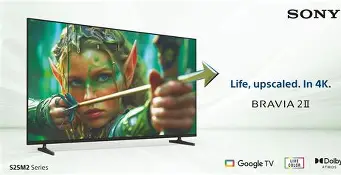
Picture quality is the primary reason people buy mid- to high-end TVs. The Bravia 2 II emphasizes accurate color reproduction, natural-looking skin tones, and competent upscaling of lower-resolution content. Sony’s processing lineage—tuned color management and motion algorithms—shows up in consistent handling of mixed-content playback: sports, cinematic films, and streaming shows. In dark-room viewing, the TV renders shadow detail with clarity, preserving texture in both deep blacks and midtones.
Motion handling is another area where the Bravia 2 II aims to stand out. Fast-travel sports and action scenes maintain a sense of fluidity with minimal judder. For fast camera pans or gameplay, judder reduction and interpolation options are available, though some viewers may prefer leaving the motion interpolation off for a more film-like presentation.
HDR and High Dynamic Range Performance
HDR performance depends on peak brightness, tone-mapping, and color volume. The Bravia 2 II delivers compelling HDR highlights that enhance specular details in bright highlights without washing midtone contrast. That said, as with many modern TVs, absolute peak brightness and sustained HDR luminance will influence how dramatic HDR content appears. In living rooms with controlled ambient lighting, HDR material looks notably improved over SDR sources.
Audio and Integrated Sound
Where many flat-panel TVs compromise, the Bravia 2 II attempts to compensate via built-in audio technologies. The TV’s speakers produce clear dialogue and a sense of spatial presence for regular TV viewing, aided by virtual surround processing. However, buyers focused on home cinema-grade sound will still find the benefit of adding a soundbar or AV receiver. The integrated audio is good for everyday use and small-to-medium rooms but not a substitute for a dedicated audio system in a serious home theater setup.
Smart Platform and Ecosystem
The Bravia 2 II runs a modern smart TV platform with a wide app selection, voice assistants, and fast app switching. The environment is designed for straightforward streaming, content discovery, and integration with mobile devices for casting and remote control. Regular system updates and a familiar interface make it accessible for non-technical household members. Power users will appreciate the available customization in the settings menu, which allows tuning picture modes, color profiles, and gaming-specific options.
Find top-rated TVs & Home Theater products at great prices.
See Deals →Gaming Features
Gaming is an increasingly important buying criterion. The Bravia 2 II supports low-latency modes, variable refresh rates (VRR), and auto low-latency mode (ALLM) for modern consoles and capable PCs. Frame pacing and input lag reduction are adequate to satisfy most console gamers, and competitive players should find latency numbers in the acceptable range when the TV is in Game Mode. HDR support for gaming titles enhances visual fidelity, although actual perceived benefit still hinges on game developers’ HDR implementations.
Connectivity and Ports
Connectivity is practical: multiple HDMI inputs, at least one with enhanced bandwidth for 4K/120Hz signals, several USB ports, and common digital audio outputs. Wireless connectivity for Wi‑Fi and Bluetooth is typically stable, which helps when using wireless headphones or connecting soundbars. Buyers should confirm the specific port and format support required for their devices (for example, eARC availability for advanced audio passthrough) as manufacturers occasionally differ by model size and regional variants.
Real-World Use Cases
- Living room with mixed lighting: The Bravia 2 II works well in rooms with variable light thanks to its adaptive picture adjustments and anti-reflective treatments that reduce glare.
- Dedicated dark-room cinephile setup: The TV preserves shadow detail and minimizes black crush, making it suitable for movie nights; pairing with a soundbar improves the cinematic experience.
- Gaming den: With low latency and support for console-friendly features, it supports both casual and serious gaming sessions.
- Family TV for streaming and sports: Fast app loading and good motion handling make it convenient for households that switch quickly between programs, streaming apps, and live sports.
Pros & Cons
Pros
- Accurate color and natural skin tones: Consistent calibration out of the box reduces the need for expert adjustment.
- Strong upscaling and processing: Lower-resolution content gains clarity and reduced artifacts, improving older or non-4K sources.
- Good motion handling: Sports and fast-paced content benefit from reduced judder and motion blur.
- Comprehensive gaming support: Low-latency Game Mode and VRR compatibility make it a capable choice for console gamers.
- Polished smart platform: Intuitive app navigation and frequent software updates help maintain a modern streaming experience.
Cons
- Integrated audio limitations: Built-in speakers are fine for everyday use but may disappoint buyers seeking immersive home theater sound without an external system.
- HDR impact varies by environment: Peak highlight performance is constrained by panel characteristics, so HDR might feel less dramatic in very bright rooms without controlled lighting.
- Price-to-feature trade-offs: The Bravia 2 II competes with other premium TVs; buyers should consider how much they value Sony-specific processing and design choices relative to competitors.
- Potential for busy menus: Power users may find multiple overlapping picture modes and enhancements that require time to learn and tune for optimal results.
How the Bravia 2 Ii Compares
| Model | Panel Focus | Best For | Smart Platform | Gaming Features |
|---|---|---|---|---|
| Bravia 2 Ii | Balanced color & contrast | Mixed-use living rooms, streaming, casual gaming | Major streaming apps & voice assistants | Low-latency, VRR, ALLM |
| High-end OLED competitor | Deeper blacks, wider viewing angles | Dedicated movie rooms, pure picture priority | Varies by manufacturer | Comparable gaming support |
| High-lumen LED competitor | Higher peak brightness for HDR | Bright rooms, HDR spectacle | Varies by manufacturer | Comparable, sometimes optimized for high refresh |
The comparison above emphasizes intended use rather than a strict spec-by-spec match. In many real-world buying decisions, the best TV is the one whose strengths align with the room, content preferences, and peripheral ecosystem the buyer already has.
Buying Guide: How to Decide If the Bravia 2 Ii Is Right
Choosing a television involves more than a model name. The following buying guide helps prospective purchasers evaluate whether the Bravia 2 II matches their priorities.
1. Define the Primary Use Case
Start by deciding what the TV will mainly do. If 70–80% of viewing is streamed TV shows and movies in a moderately lit living room, the Bravia 2 II’s balanced picture and smart features make it a strong candidate. If the room is a dedicated dark-screen home theater focused on absolute black levels, consider a display specifically optimized for deep contrast.
2. Consider Screen Size and Viewing Distance
Measure the seating distance to determine the optimal screen size. Larger panels amplify both strengths and weaknesses: a bigger screen will make color and HDR more impactful but will also highlight reflections and upscaling limitations. The Bravia 2 II is typically offered in multiple sizes, so match the size to the room rather than buying the largest available model by default.
3. Evaluate HDR and Brightness Needs
If the room receives a lot of natural light, prioritize peak brightness and anti-reflection properties. For evening movie sessions in a dark room, contrast and tone mapping matter more. The Bravia 2 II balances both but check display performance in the environment it will live in, because HDR perception can change dramatically with ambient light.
Shop the latest TVs & Home Theater picks on Amazon.
See Deals →4. Check Gaming Specifications
Gamers should confirm specific features: does the model support 4K @ 120Hz over HDMI, VRR, ALLM, and low input lag in Game Mode? For owners of next-gen consoles or high-refresh gaming PCs, these are essential checks. The Bravia 2 II includes gamer-oriented features, but verify the exact HDMI bandwidth and refresh-rate behavior for the chosen screen size.
5. Think About Audio and Room Acoustics
A flawless picture can be undermined by poor audio. Determine whether external audio (soundbar or receiver) will be part of the setup. If so, ensure the TV supports necessary passthrough features like eARC to simplify connection and maintain high-quality surround sound options.
6. Smart Platform and Ecosystem Integration
Confirm the availability of the services used most often—streaming apps, casting protocols, and voice assistants. The Bravia 2 II’s platform is designed for broad compatibility, but regional app availability sometimes varies. Also consider how the TV fits with existing devices: streaming sticks, set-top boxes, and smart home systems.
7. Budget and Long-Term Value
Price matters, but so does longevity. Look at the TV’s warranty, expected software update cadence, and whether the manufacturer offers firmware improvements that enhance features over time. A TV that receives regular updates may feel fresh longer than one with the same initial specs but poorer long-term support.
Practical Tips for Setup and Calibration
- Use the default picture mode as a starting point: Many models ship in “Vivid” or “Dynamic.” Switching to a “Cinema” or “Custom” mode often yields more accurate color and less aggressive processing.
- Turn off unnecessary motion smoothing for films: Motion interpolation can make movies look unnatural; keep it on for sports if preferred.
- Enable Game Mode for consoles: This reduces input lag by disabling certain post-processing effects.
- Position the TV to reduce reflections: Slight angling or placement away from direct light improves perceived contrast and HDR impact.
- Invest in a simple calibration or use a calibration disc: Even minor tweaks to brightness, contrast, and color temperature can make a big difference.
Conclusion
The Bravia 2 Ii is a thoughtfully engineered television that targets buyers who want a dependable, well-rounded viewing experience. Its strengths lie in color accuracy, image processing, and versatile smart features that serve families, streamers, and gamers alike. While it does not eliminate the need for a dedicated audio system for the most demanding listeners, it provides a balanced audio-visual package suitable for the majority of homes. Whether the Bravia 2 II is the right choice depends on the buyer’s environment, priorities, and the importance placed on features like peak HDR brightness or absolute black levels. For many users seeking a future-proof, easy-to-live-with TV that handles daily content switching, movies, and gaming competently, the Bravia 2 II represents a compelling option worth serious consideration.